Every outbound tool now says it works from intent. Most of them mean a filter: a title, a headcount band, a funding round from three months ago. That is not intent. Nobody did anything.
A warm signal is narrower and more useful: a thing a specific person did recently, in public, that tells you what is on their mind. It has an actor, an action, a topic and a date. If you cannot name all four, you have a list, not a signal.
The four parts of a signal
- Actor — the person, not the company. Companies do not read messages.
- Action — reacted, commented, posted, followed, applied, hired.
- Topic — what the action was about, in their words.
- Date — when. A signal decays, and most decay inside two weeks.
The date is the part people skip, and it is the part that decides whether the message lands. "I saw you commented on X" is a good opener on Tuesday and a strange one a month later.
Ranked by what they produce
From our own runs, best first:
- Commented on a post about the problem you solve. Rare, unambiguous, and the comment itself gives you the opening line.
- Reacted to a voice your buyers follow. Volume and relevance together. This produced the majority of leads in every run we have done.
- Posted using a phrase that names the problem. They are thinking about it right now, in their own words.
- Engaged with a competitor's page. High intent, low volume, and often the same audience everyone else is fishing in.
- Hiring for the role that owns the problem. A company signal rather than a person one, so it needs a second step to find the buyer.
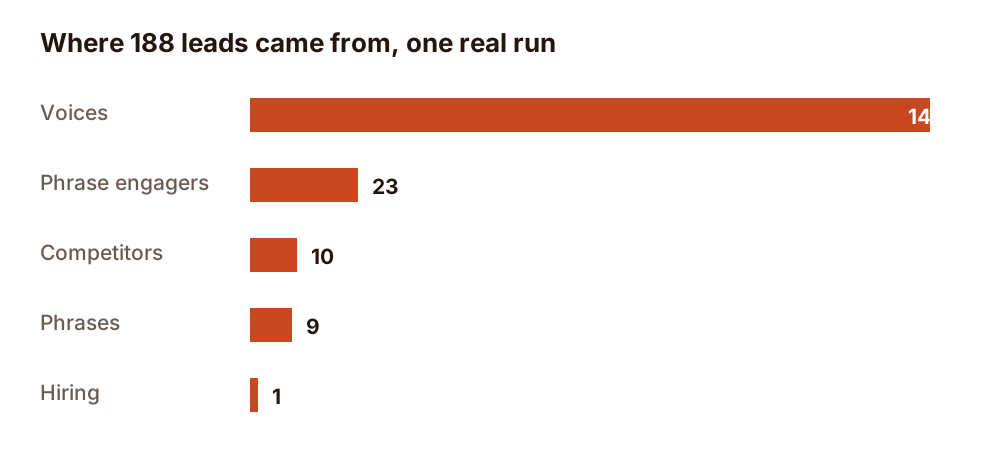
That gap is not subtle. In the run above, voices produced more leads than every other signal put together — which is why the first thing we ask a new workspace for is the people its buyers already follow.
What we do with the weak ones
A single like is not nothing, but it is not enough on its own. We treat it as a tiebreaker: if someone liked one post, they stay in the pool; if they liked three, they move up it. Signals compound, and repetition is the cheapest proxy for interest we have found.
Why this matters for the message
If the signal has all four parts, the first line of the message writes itself, because you are referring to something they actually did. If it does not, you end up writing about them in general terms, which is the tell every buyer on LinkedIn has learned to spot.
 Deven Bhooshan
 Utsav Patel