Open with the point, not with a wind-up. The first two lines decide whether anyone reads the third, and they are also what Google shows. Say the thing you learned, then explain how you learned it.
Paragraphs are plain text separated by a blank line. Bold is for the phrase
a skimmer should catch, italic for emphasis inside a sentence, and code for
anything a reader would type or copy.
Headings become the table of contents
Use ## for sections and ### for anything beneath them. Both appear in the
contents box at the top of the post, which builds itself from these headings —
there is nothing to maintain by hand. The contents box hides itself on short
posts, so do not add headings to force it.
A sub-heading looks like this
Keep them short. They are navigation, not sentences.
Lists
Bulleted, when order does not matter:
- One idea per bullet, written as a full thought.
- Bold the first few words when the bullet has a label.
- Three to six bullets reads well; twelve does not.
Numbered, when order does matter:
- Add the signal.
- Let the run finish.
- Keep or skip every lead it found.
- Read what the keeps have in common.
Quotes and tables
Pull out a line worth stopping on — something a customer said, or the sentence the whole post rests on.
Tables are for numbers that would be a mess as prose:
| Signal | People read | Leads | Kept |
|---|---|---|---|
| Voices | 1,240 | 38 | 31 |
| Phrases | 610 | 12 | 7 |
| Competitors | 290 | 4 | 2 |
Links and images
Link with the words that describe the destination — how we score a lead rather than "click here". External links are fine; they open in the same tab.
Images live in public/blog/<your-post-slug>/ and are referenced from the
site root. Delete the line below if your post has no image:
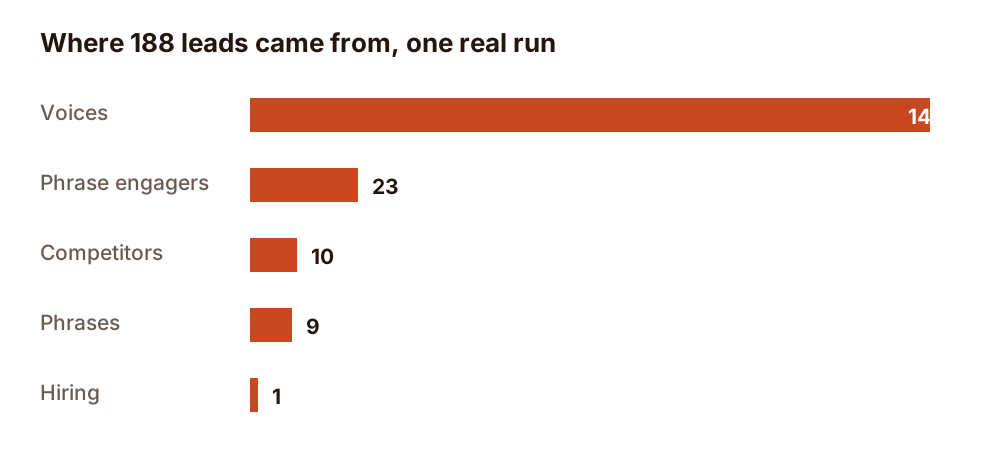
Give every image alt text that says what it shows. If it is decoration, leave the alt empty and say so.
Ending
End on what changed because of what you learned, or what you would do next. Avoid a summary of the post — the reader has just read it.
 Deven Bhooshan
 Utsav Patel