
If you are looking for a Traxy alternative, you probably already know which part stopped working.
Traxy watches profiles you nominate and hands you the people who engaged with their posts. That works while your market has loud accounts posting often. The moment it does not, the watchlist runs dry, and there is a second ceiling underneath it: each watched profile contributes only its five most recent posts published after you added it, so somebody who posts daily is mostly invisible by the end of the week.
Then there is the meter. At $149 a month you get 5,000 credits, and the hourly agent spends them on every unique profile it scans, including the ones that never qualify. A loosely drawn ICP costs money and returns nothing. Their own troubleshooting page is named after that failure.
Here are four alternatives, starting with the table. WarmDogo is first on the list and it is the tool behind this site, so the rest of the page is written to be useful if you pick one of the other three.
What are the best Traxy alternatives?
Prices read from each company's own pricing page in late September 2026.
| Tool | Starting price | What it watches | Where the leads go | Best for |
|---|---|---|---|---|
| WarmDogo | $99 a month | Public LinkedIn signals, 30 of them on Hunt | CSV, or an assistant over MCP | Reaching past the accounts you can name |
| Max | €79 a month | 26 signals, most of them company events | Slack, email digest, Overloop, Lemlist | Funding and hiring triggers |
| Warmo | Demo only | Company events, then the buying committee | Cold email from your own mailboxes | Account-first outbound |
| Bitscale | $349 a month | About 15 signals, with enrichment | Instantly, Smartlead, HeyReach | Teams already running a data stack |
1. WarmDogo
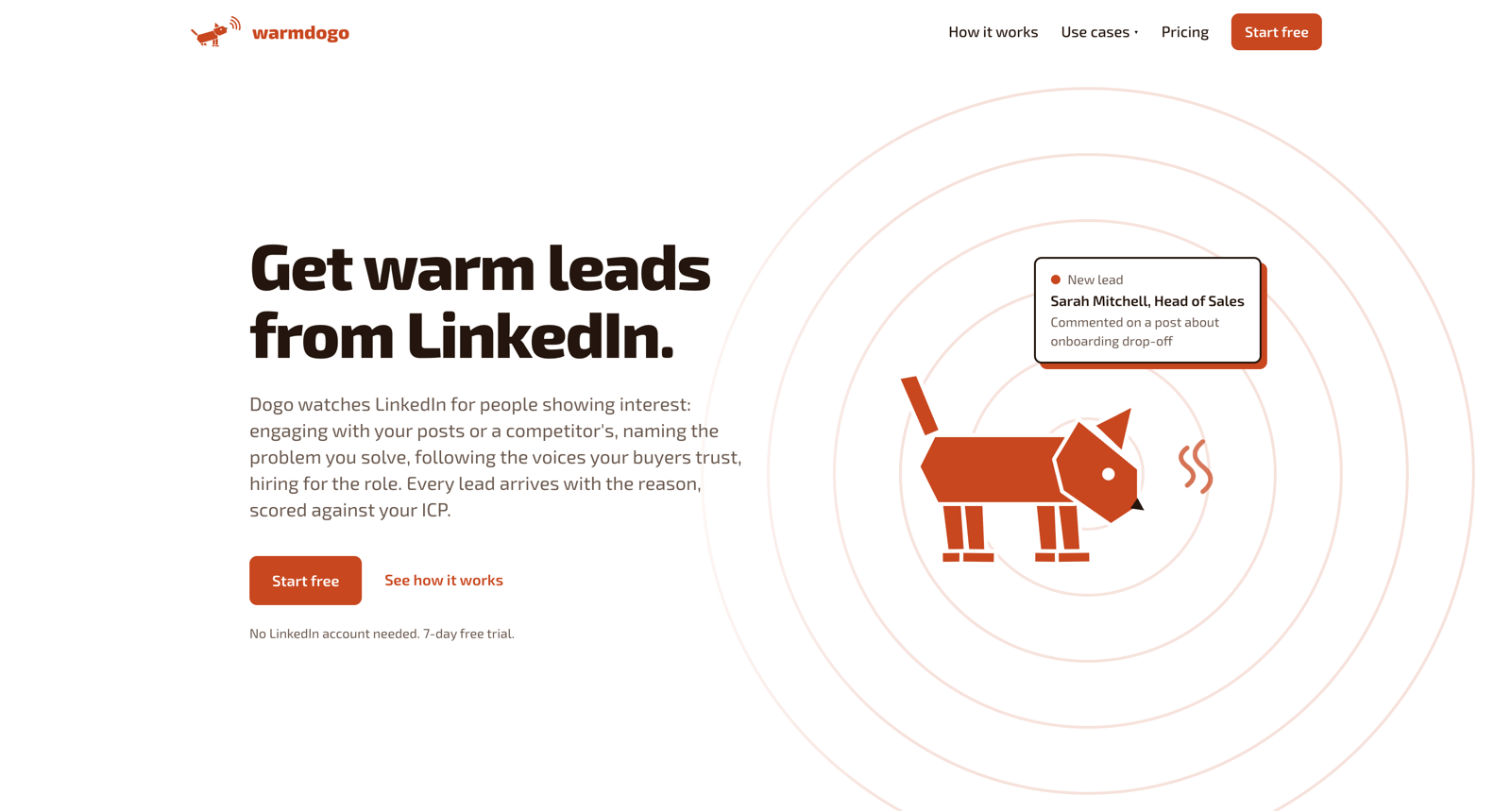
WarmDogo watches 30 public LinkedIn signals at once and hands you a scored list every morning. They are drawn from nine kinds: engagers on your own posts and on a competitor's, people reacting to the wider conversation about a problem, people writing about that problem themselves, the followers of voices your buyers trust, commenters the people who leave a comment, companies hiring the role that owns the problem, reactors to one post you pick, and people who fit your ICP and posted this month.
The difference from Traxy is where coverage starts. A watchlist reaches as far as the accounts you can name. Most of those nine need no account named at all, so a market whose buyers post about their problem without following anybody in particular is still reachable. Pricing works differently too: you pay for the number of signals running, and leads, agents and workspaces are unlimited on both plans, so a run that qualifies nobody costs the same as one that finds forty.
Best for: teams whose market is wider than a list of accounts, and anyone tired of watching credits drain on profiles that never qualified.
Key features
- 30 public LinkedIn signals, run together
- ICP scoring with the public evidence attached to every lead
- A keep or skip review queue that reorders the next run
- CSV export, and an MCP server for Claude, ChatGPT or Cursor
Pros
- No LinkedIn account to connect, so nothing of yours carries automation risk
- Priced by signals, so a loose ICP costs nothing extra
- Unlimited leads, agents and workspaces on both plans
Cons
- Sourcing only, so you still need somewhere to send from
- LinkedIn only, with no X, Reddit or email signals
Pricing: Sniff is $99 a month for 10 signals, Hunt is $249 a month for 30. Yearly billing is two months free. 7-day free trial. Card required, cancel any time. How it runs for one rep and across clients is written up separately.
2. Max

Max is the closest like-for-like swap. It watches 26 named signals, each documented on its own page, scores every person against your ICP, attaches the public evidence that surfaced them, and drops a reviewed queue into Slack or a morning email. Roughly nine of the 26 are engagement-shaped and the rest are company events: funding, hiring, job changes, tech stack changes, M&A, public tenders, rebrands.
It prices by leads delivered, at about €79 for five leads a day and €199 for twenty-five, so the bill tracks the output. It is operated by Sortlist, which owns the Overloop sender, and the Overloop handoff is the deepest integration in the product.
Best for: teams who want funding, hiring and tender events alongside engagement, and who prefer a morning digest to another dashboard.
Key features
- 26 named signals, each with its own documentation page
- Evidence attached to every lead and kept there
- An accept and reject queue whose rejections feed back into ICP fit
- Delivery to Slack, daily email, Overloop, Lemlist, Instantly, HubSpot
Pros
- The widest signal range of anything here
- Priced by leads a day, so the bill matches what arrives
- Multiple ICPs, auto-accept rules, CSV export and an API
Cons
- No published customers, case studies or reviews yet
- The lead cap is the plan: about 25 a day at Pro, then it is a sales call
Pricing: Starter €79 a month for about 5 leads a day, Pro €199 for about 25. Agency is custom and demo only. Annual billing saves 20%.
3. Warmo
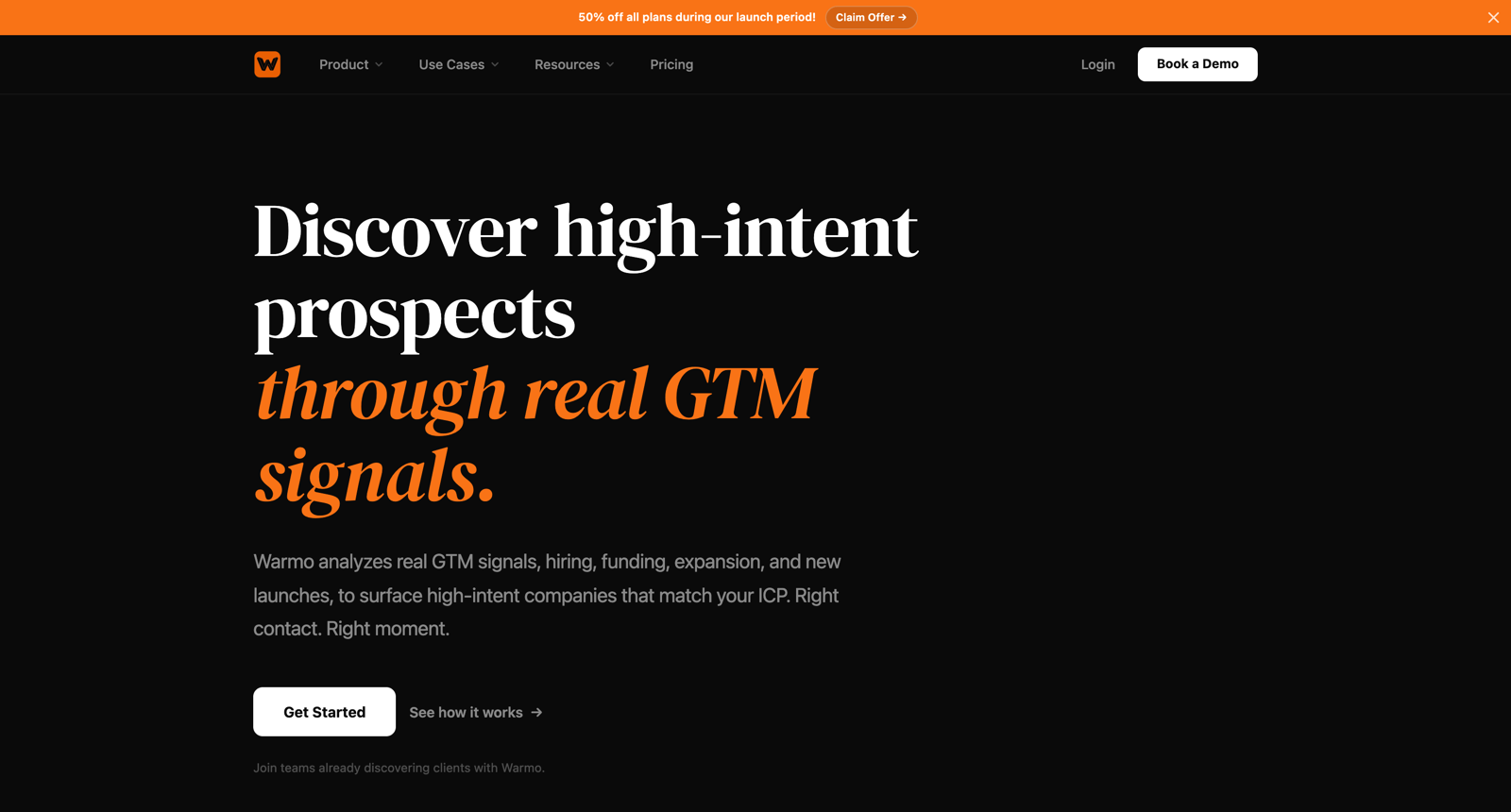
Warmo works the other way round from everything else here. It finds companies where something just happened, hiring, funding, expansion, a launch or a technology change, then finds the buying committee inside them and emails it. Research runs against the live web and arrives attached to the account, with written outreach angles attached to it.
There is no LinkedIn anywhere in the product, on the site or in the privacy policy. Sending is cold email from mailboxes you set up and keep deliverable yourself, so the deliverability work is yours.
Best for: account-first outbound by email, where the trigger is something that happened to the company, and the buying committee is worked out after.
Key features
- Company-level signals: hiring, funding, expansion, launches, tech adoption
- Market research per account, pulled from the live web
- Buying-committee lookup with verified email addresses
- Email campaigns, sequences, a unified inbox and analytics
Pros
- Company events that a LinkedIn-only tool cannot see
- Research and written angles arrive with the account
- Finding and emailing live in one tool
Cons
- No price published anywhere, so every plan needs a call
- Mailbox setup and deliverability are left to you
- Data sources are undisclosed, named only as third parties
Pricing: Starter, Pro and Agency, all custom behind a demo. A launch banner offers 50% off with no stated end date.
4. Bitscale
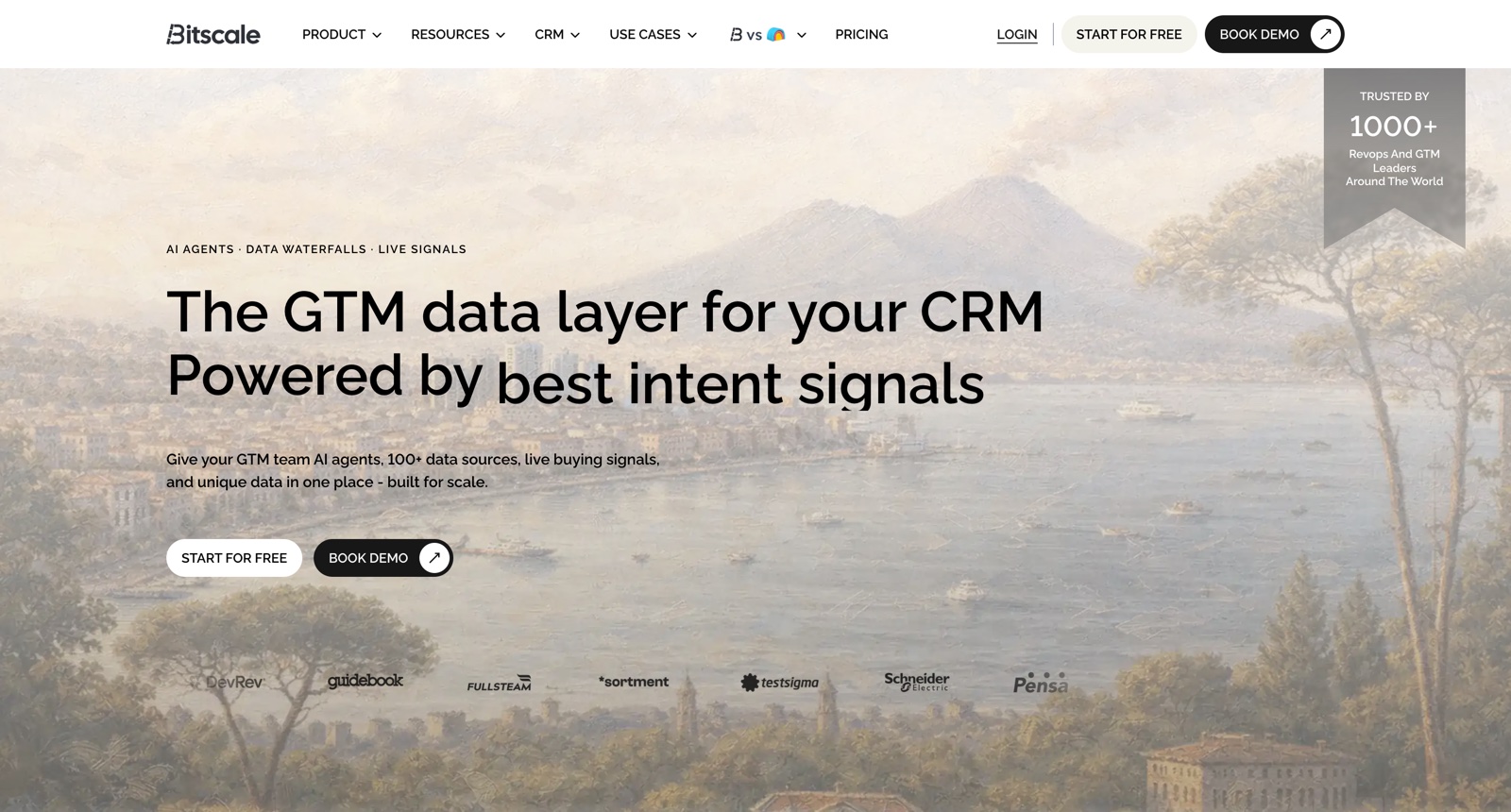
Bitscale suits a team that already runs a data stack. It reads about fifteen buying signals, including funding, hires, tech changes, job changes and viral posts, and can pull the engagers from a LinkedIn post once. The real draw is what sits around that: Clay-style enrichment, HubSpot and Salesforce sync, and delivery into Instantly, Smartlead or HeyReach.
That makes it the broadest tool here and the least focused on LinkedIn. If the signals are one input among several and the enrichment matters as much as the trigger, it fits. If LinkedIn activity is the whole job, you are paying for a data layer you will not use.
Best for: teams running a GTM data stack who want signals and enrichment in the same place.
Key features
- About 15 buying signals, from funding to tech changes to viral posts
- Clay-style enrichment across the record
- HubSpot and Salesforce sync
- Delivery into Instantly, Smartlead and HeyReach
Pros
- The deepest enrichment of anything on this page
- Fits an existing data stack and extends it
- A free tier to try before paying
Cons
- The most expensive here, starting at $349 a month
- LinkedIn is one source among many, so the focus sits elsewhere
Pricing: Free tier, then $349 or $799 a month. Enterprise starts around $15,000 a year.
What happened to Trigify?
Trigify belonged on this list and is leaving it. The team joined HubSpot on 23 September 2026 and the standalone platform is winding down, with customer access ending on 22 October 2026.
It was detection-only, reading signals from LinkedIn, X, Reddit and YouTube and resolving them to a person, so anyone running it is looking for one of the four above. The window is short: about two weeks from the date on this page.
How do you switch from Traxy?
Start from the reason you are leaving, because it picks the tool for you.
If the watchlist ran dry, the fix is more places to look, and WarmDogo or Max both reach past named accounts. If the credits were the problem, look at what each one meters: WarmDogo charges for signals running, Max for leads delivered, and neither moves with how many profiles got scanned. If you want company events rather than people doing things, Warmo and Bitscale are built for that and Traxy never was.
Then keep your sender. None of these tools send, Traxy did not either, and whatever you already send from carries over unchanged. Switching the source does not mean rebuilding the rest.
See what WarmDogo costs, or read the signals it watches.